Ashburnham Pentateuch
Type:
Illuminated manuscripts
Date:
Late sixth or early seventh century
Medium:
Parchment
Dimensions:
37.5 × 31 cm
Description:
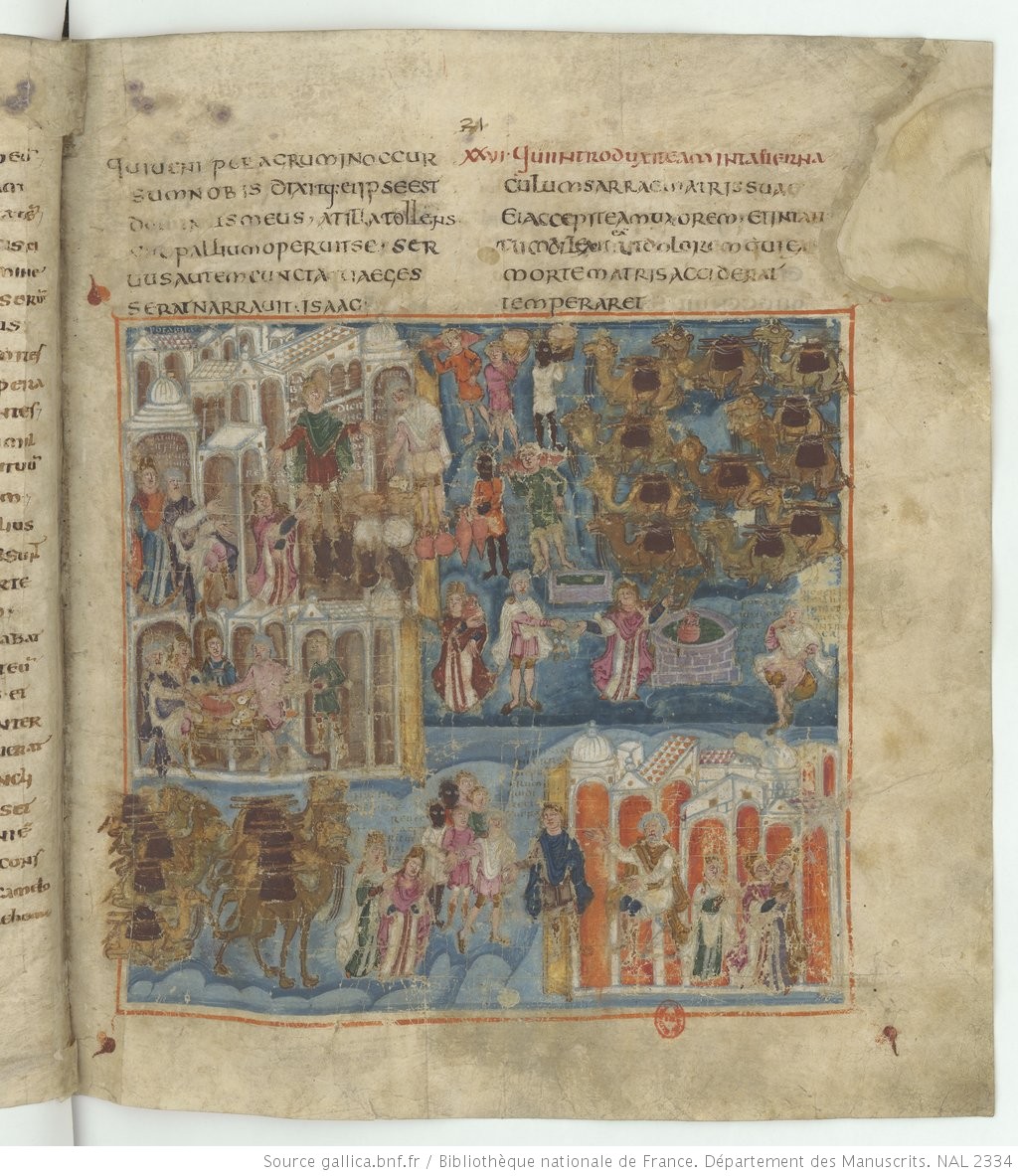
A Pentateuch (from the Greek for "five scrolls") is a collection of the first five books of the Hebrew Bible (also known as the Christian Old Testament). The Ashburnham Pentateuch, which is now incomplete, is a late sixth- or early seventh-century Christian manuscript named after the English collector Bertram Ashburnham (1797–1878). The text is written in Latin and eighteen of its sixty-eight or so original illustrated pages survive.
The Ashburnham Pentateuch may have been made in Italy, but scholars have also proposed North Africa, Syria, and the Iberian Peninsula as possible alternatives. Representations of both white- and black-skinned Egyptians (e.g., attending to camels and serving as members of Pharaoh's retinue) are among the illustrated details that have fueled the debates on origins. While the presence of black Egyptians could reflect the racial diversity of the manuscript's place of production (e.g., North Africa), it is more likely that the artist used blackness to signal an exotic, distant locale and possibly the sinfulness and corruption of the individuals represented.
Among the scenes from the book of Exodus is an image of Moses slaying a black taskmaster (fol. 65v) and of Egyptians suffering violence during the tenth and final of the Plagues of Egypt (the slaying of the firstborn). The plagues are a series of disasters God inflicts on Egypt in an attempt to force Pharaoh to free the Israelites from slavery. The artist paints the firstborn as grown children, denying them the innocence that would have come with depicting them as infants. One especially notable feature is the suggestion of mixed-race children in the images of black fathers and white mothers grieving their black children.
Relevant Textbook Chapter(s):
3
Repository and Online Resources:
• Look through the manuscript on the website of the Bibliothèque nationale de France.
Tags:
Christian,
Western European,
Status and identity,
Ideology,
Bible,
Family,
Latin,
Women