Forty Martyrs micromosaic icon
Type:
Icons
Date:
ca. 1310
Location or Findspot (Modern-Day Country):
Turkey
Dimensions:
22 × 16 cm
Description:
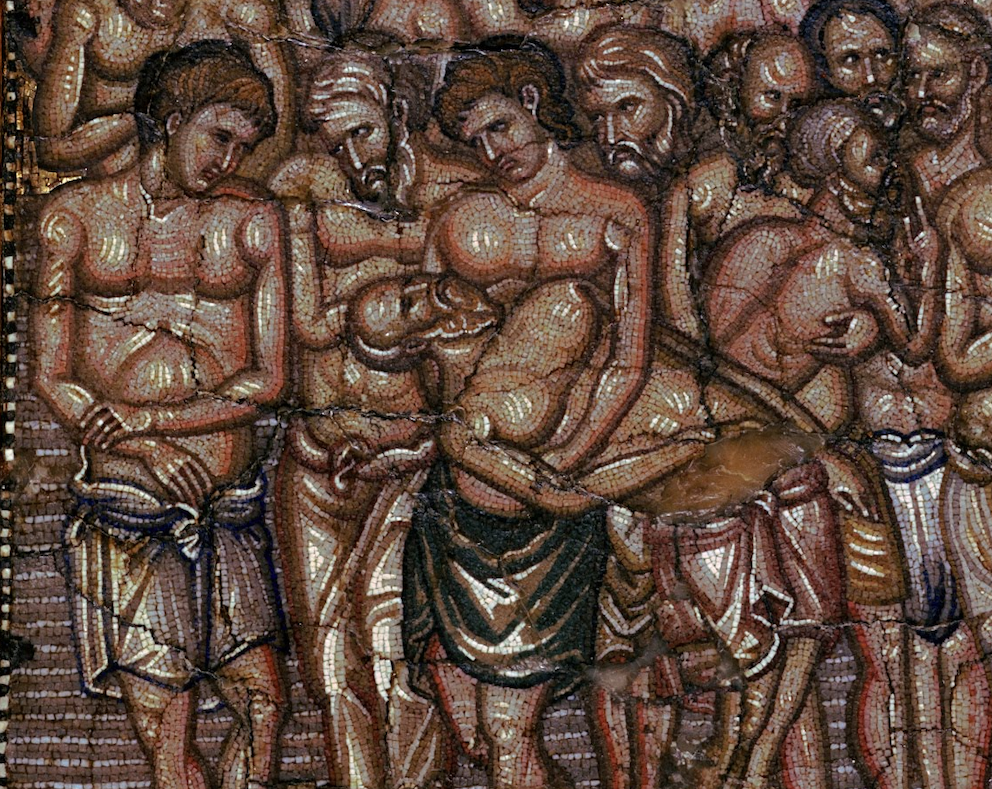
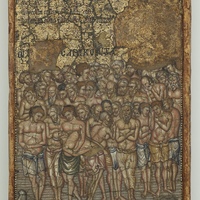
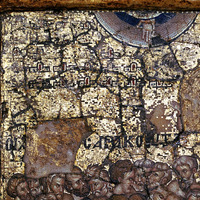
Forty nearly naked men were exposed on a frozen lake near Sebaste (Turkey) in the early fourth century because they refused to worship the emperor or the pagan gods. One man who gave in and sought a warm bath onshore died, but a guard immediately took his place among the martyrs. Forty martyrs' crowns descend from the Hand of God in the upper left, and the bath building was probably represented in the damaged upper right part of this micromosaic icon. The fragmentary Greek inscription below the crowns says "The Holy Forty."
The mosaic artist has depicted the men with tesserae that measure approximately 1 square millimeter, creating individualized portraits of suffering. Costly micromosaics were especially popular in the late Byzantine era. Their small scale indicates private usage: they helped focus an individual's personal devotion. Like the forty shivering martyrs, the Orthodox owner of the icon should shiver with spiritual dread while contemplating his or her own divine judgment.
The mosaic artist has depicted the men with tesserae that measure approximately 1 square millimeter, creating individualized portraits of suffering. Costly micromosaics were especially popular in the late Byzantine era. Their small scale indicates private usage: they helped focus an individual's personal devotion. Like the forty shivering martyrs, the Orthodox owner of the icon should shiver with spiritual dread while contemplating his or her own divine judgment.
Relevant Textbook Chapter(s):
9
Repository and Online Resources:
• The Forty Martyrs micromosaic icon is in the Dumbarton Oaks collection in Washington, DC (BZ.1947.24).
• Read about how Dumbarton Oaks acquired the icon here.
• Zoom in on the icon here.
Image Credits:
© Dumbarton Oaks Research Library and Collection, Washington, DC
Tags:
Byzantine,
Christian,
Access to the sacred,
Artistic production,
Domestic,
Greek ,
Saints