Mehmed II medallion
Date:
ca. 1480
Location or Findspot (Modern-Day Country):
Turkey
Medium:
Bronze
Dimensions:
9.38 cm
Description:
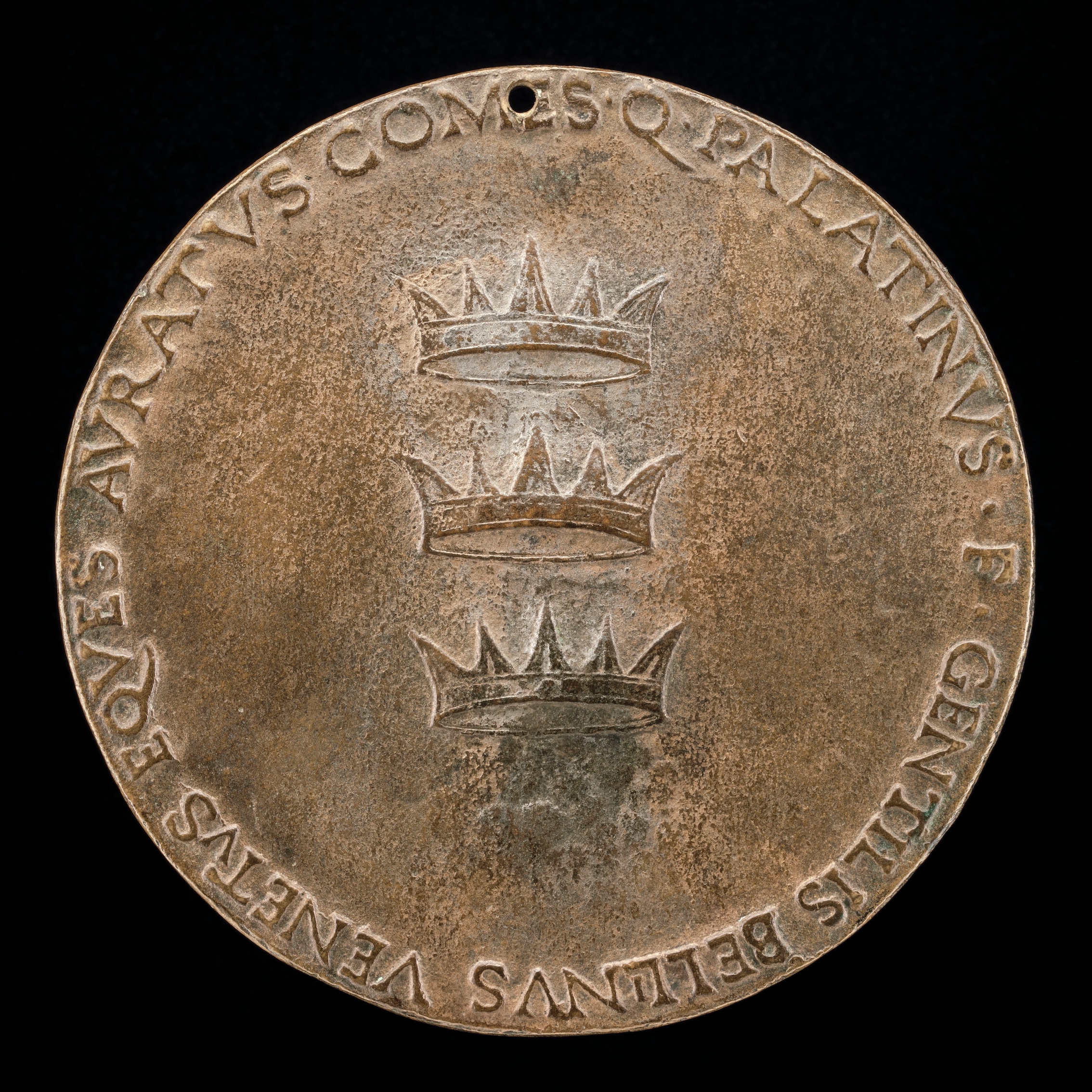
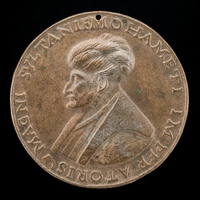
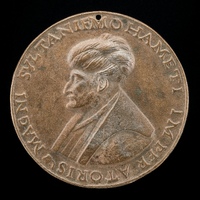
The Ottoman sultan Mehmed II (r. 1451–81) commissioned this bronze medallion almost three decades after he conquered Constantinople on May 29, 1453. Mehmed wanted Italian artists to come to Istanbul (formerly Constantinople), and one who did was Gentile Bellini, who arrived in 1479 and spent over a year there. He had recently painted portraits of the Venetian doges, and in Istanbul he produced oil portraits of the sultan and court officials, as well as this medallion—the only one he made. Medallions were a new form of portraiture, developed in Renaissance Italy but based partly on ancient Roman coins, in which rulers were represented in profile. Mehmed may have learned about innovative Italian portraiture through this portable medium.
Mehmet is depicted on the medallion's obverse in profile, wearing a turban, an inner robe, and a caftan (cloak). His aquiline nose and short beard are realistic features seen in all of his portraits. The surrounding inscription says, in Latin, "Great Sultan Mehmed, Emperor." The reverse depicts three crowns, probably representing the kingdoms that composed the sultan's empire: Constantinople (the Roman Empire), Konya (Asia Minor), and Trebizond (an independent empire since the Latin conquest of Constantinople in 1204). The inscription on this side focuses on the artist: "Gentile Bellini, Venetian, gilded knight and count palatine, made it." Bellini's oil portrait of Mehmed (now in the National Gallery, London) also depicts the three crowns.
Mehmet is depicted on the medallion's obverse in profile, wearing a turban, an inner robe, and a caftan (cloak). His aquiline nose and short beard are realistic features seen in all of his portraits. The surrounding inscription says, in Latin, "Great Sultan Mehmed, Emperor." The reverse depicts three crowns, probably representing the kingdoms that composed the sultan's empire: Constantinople (the Roman Empire), Konya (Asia Minor), and Trebizond (an independent empire since the Latin conquest of Constantinople in 1204). The inscription on this side focuses on the artist: "Gentile Bellini, Venetian, gilded knight and count palatine, made it." Bellini's oil portrait of Mehmed (now in the National Gallery, London) also depicts the three crowns.
Relevant Textbook Chapter(s):
11
Repository and Online Resources:
• The medallion is in the National Gallery of Art, Washington, DC (acc. no. 1957.14.737.a–b).
• See Bellini's oil portrait of Mehmed II here.
Image Credits:
National Gallery, Washington, DC