Vatican sakkos
Date:
mid-fourteenth century
Location or Findspot (Modern-Day Country):
Greece
Medium:
Silk,
Silver or gold thread,
Gilt-silver
Dimensions:
162 × 144 cm
Description:
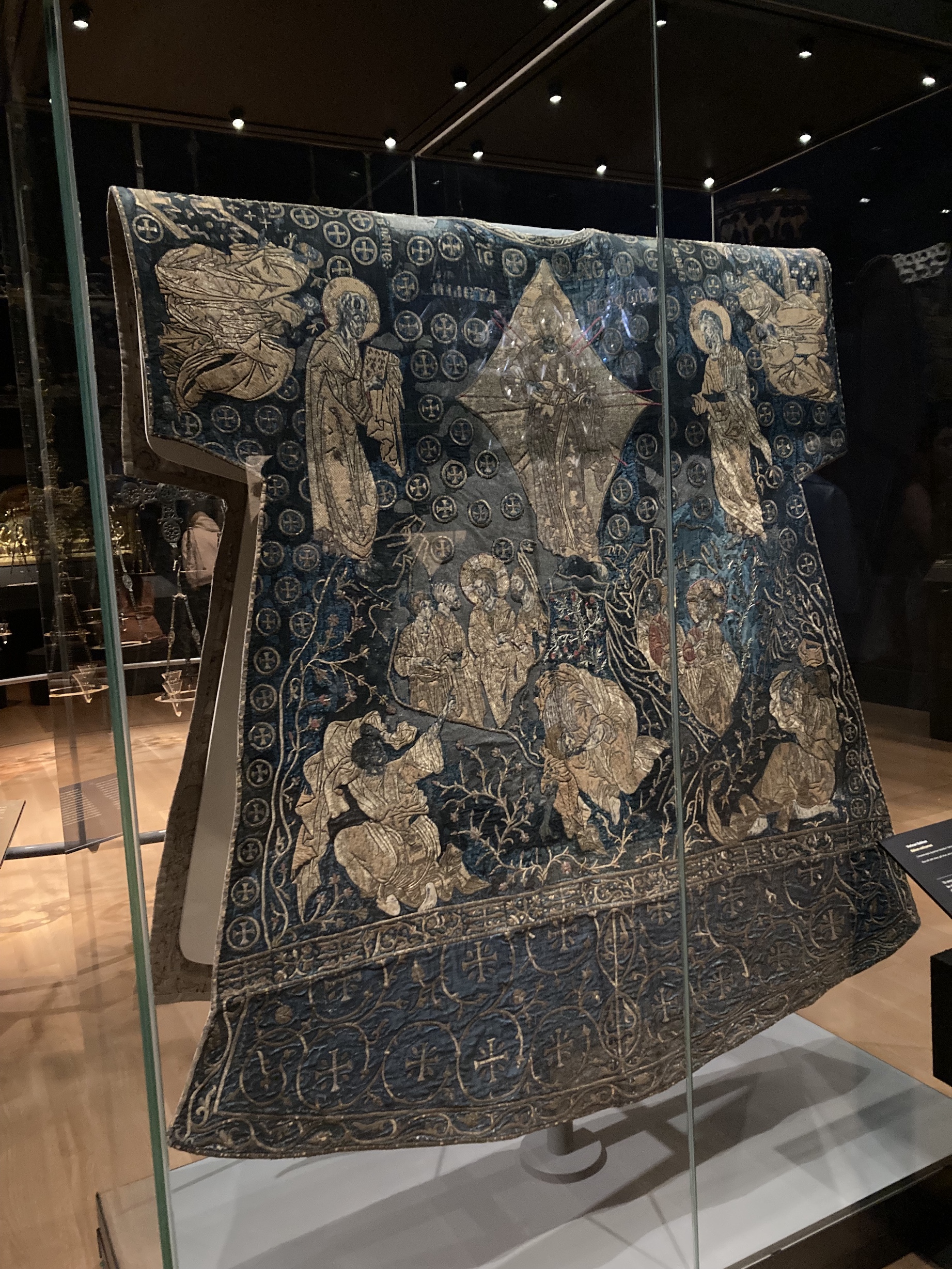
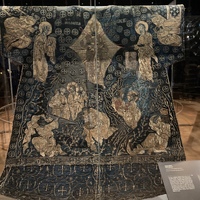
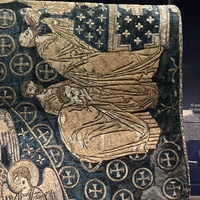
The embroidered sakkos was worn by Orthodox patriarchs and some archbishops during the eucharistic liturgy on certain feast days. The stiff, shining garment transformed the celebrant into a flattened figure akin to the saints depicted on the church walls. The garment has sometimes been called, erroneously, the Dalmatic of Charlemagne. It was likely made in Constantinople or Thessaloniki and was probably sent as a gift to the pope; it first appears in Vatican inventories in 1489. It is now in the Treasury Museum of St. Peter's Basilica.
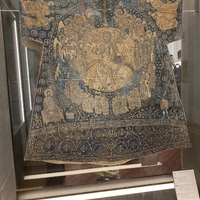
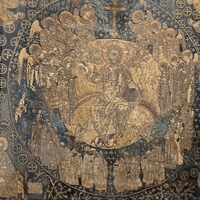
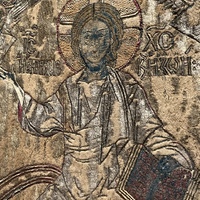
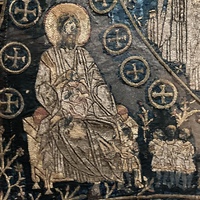
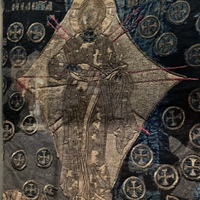
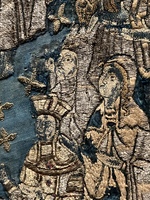
Christ in Majesty, enthroned on rainbow, appears on the front of the sakkos. He is flanked by Mary and John and encircled by saints and angels in a "Great Deesis" scene. The saints are organized by type, with groups of holy women, Old Testament figures, bishops, martyrs, and apostles. The inscription around Christ's head says "the Resurrection and the Life" (John 11:25); this is a scene of glory in heaven, underscored by the words on his open book, "Come ye blessed of my Father, inherit the kingdom prepared for you" (Matt. 25:34). At the lower left, the saved souls are gathered into the bosom of Abraham, while the Good Thief appears at the lower right. The scene thus resembles a Last Judgment, but without the damned and their punishments.
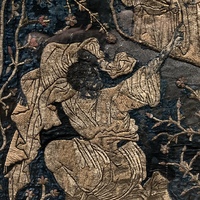
The Transfiguration (Greek Metamorphosis) is represented on the back, a foreshadowing on Earth of Christ's glory at the Resurrection. Christ's epiphany is witnessed by apostles and two Old Testament prophets, as recorded in three of the Gospels. This scene was important in mid-fourteenth-century discussions about hesychasm (Greek for "stillness")—was the light that emanated from Christ during the Transfiguration distinct from God or divine, and could hesychast practitioners witness this light through their meditative practices? It is possible that this sakkos belonged to the greatest proponent of hesychasm, the archbishop of Thessaloniki (later Saint) Gregory Palamas (1296–1359, canonized 1368).
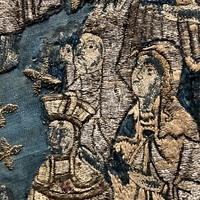
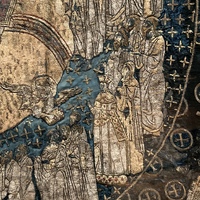
The Communion of the Apostles appears on the short sleeves of the sakkos, underscoring that the eucharist is the means by which the faithful, like the saints, can ultimately achieve union with Christ (theosis) and share in his glory.
Relevant Textbook Chapter(s):
10
Image Credits:
Linda Safran