Dynna stone
Type:
Monuments,
Sculptures,
Stelae
Date:
1040–50
Location or Findspot (Modern-Day Country):
Norway
Medium:
Stone
Dimensions:
282 × 54 cm
Description:
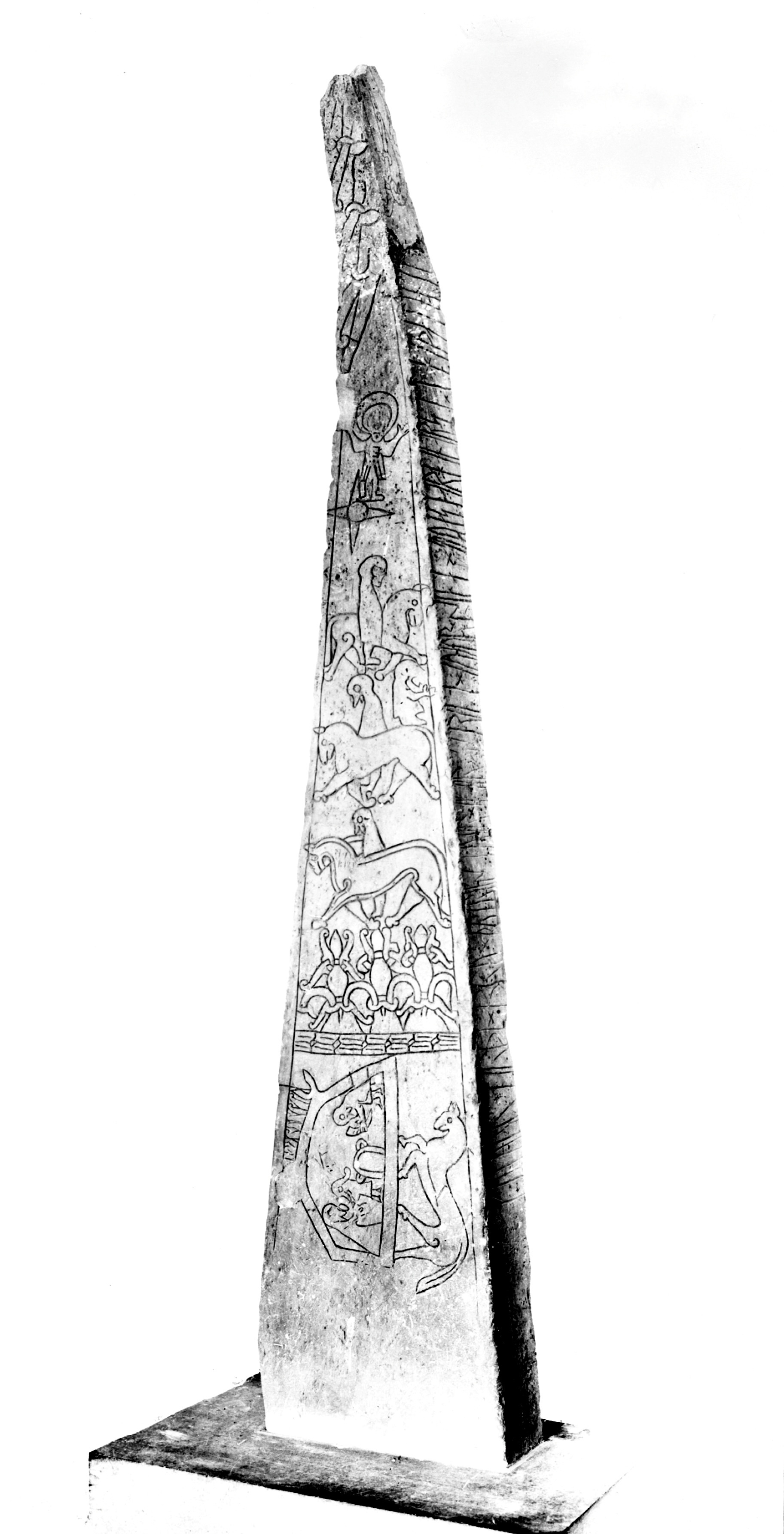
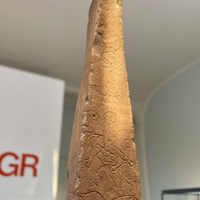
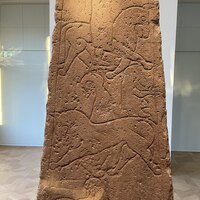
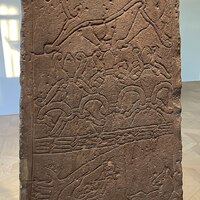
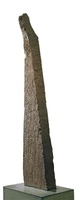
The Dynna stone provides early evidence for Christianity in Norway. It depicts on the front a Nativity scene, with the three Magi on horseback following the star of Bethlehem to venerate the Christ child in the stable. The haloed Christ is near the top, above a star with four rays, and the stable is depicted near the bottom. This Christian narrative is accompanied by geometric and ornamental motifs found in Scandinavian arts long before the arrival of Christianity.
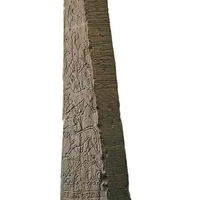
The runic inscription on the narrow right side credits the sandstone stele to a woman named Gunnvor, daughter of Trydrik, who built a bridge—perhaps a causeway over marshy land—in memory of her daughter, Astrid, who is called "the handiest maid in Hadeland." Handiest may refer to Astrid's needleworking skills. Women were important artisans as well as patrons of art and architecture during the Viking Age.
The runic inscription on the narrow right side credits the sandstone stele to a woman named Gunnvor, daughter of Trydrik, who built a bridge—perhaps a causeway over marshy land—in memory of her daughter, Astrid, who is called "the handiest maid in Hadeland." Handiest may refer to Astrid's needleworking skills. Women were important artisans as well as patrons of art and architecture during the Viking Age.
Relevant Textbook Chapter(s):
6
Repository and Online Resources:
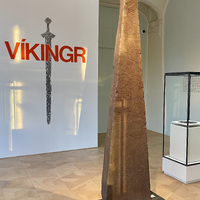
• The stone is part of the Víkingr exhibition in the Museum of Cultural History (Kunsthistorisk), Oslo, no. C9909.
Image Credits:
Eirik Irgens Johnsen/Kulturhistorisk museum, Universitetet i Oslo; Wikimedia Commons, Wolfmann